With flagship-tier mobile processors now standard in upper-midrange devices, purchasing an Android smartphone intended to operate smoothly for three to four years has moved past the era of chasing synthetic benchmark leaderboards. For prospective buyers, the primary financial crossroads consistently emerges at a specific threshold: does stepping up from a $500-$700 value flagship (such as a standard flagship or specialized sub-tier device) to a $1,000+ "Ultra" flagship deliver tangible, daily performance, or are consumers primarily funding specialized camera modules and luxury marketing margins?
Making an informed decision requires looking beyond promotional spec sheets to identify where manufacturers make deliberate hardware compromises. Beyond obvious differences in camera glass, the two tiers diverge in display substrate efficiency, vibration motor fidelity, USB data bus speeds, and physical weight distribution. On the software side, manufacturer OS update policies and lithium battery cycle management directly dictate whether a device remains fast and reliable into its fourth year of service. Establishing a structured evaluation framework helps buyers avoid unnecessary expenditures while securing long-term durability.
1. What the $500 Price Gap Buys: Deconstructing Flagship vs Sub-Flagship Hardware
Modern value flagships and top-tier Ultra flagships frequently share identical silicon foundations, such as Qualcomm’s Snapdragon 8 series or MediaTek’s Dimensity 9000 platforms. Yet across the broader Bill of Materials (BOM), the hardware configurations differ substantially.
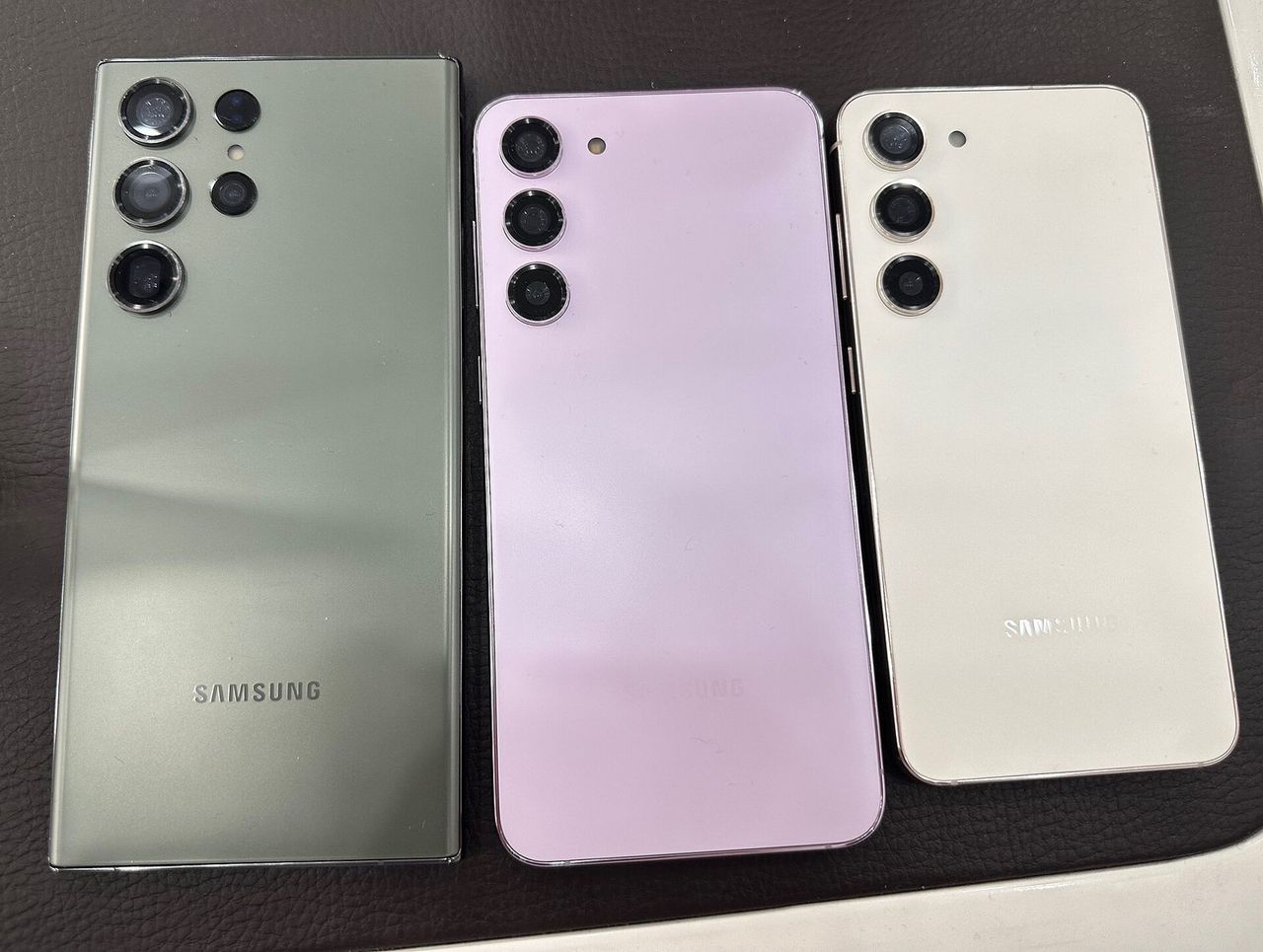
Core Hardware Specification Comparison
To maintain competitive pricing in the $500 to $700 bracket, manufacturers engineer specific hardware cutbacks, whereas $1,000+ models serve as unconstrained component showcases:
| Hardware Metric | $500 - $700 Value Flagships | $1,000+ Ultra Flagships | Real-World Daily Experience |
|---|---|---|---|
| <strong>Main & Telephoto Optics</strong> | 1/1.56-inch primary + upright 3x optical | 1-inch type primary (LYT-900) + dual periscopes | Daytime images match closely; Ultra leads in extreme low light and 10x+ zoom |
| <strong>Display Panel & Substrate</strong> | 1.5K LTPS / early-generation LTPO | 2K 8T LTPO with variable micro-refresh | Ultra achieves higher outdoor peak nit brightness and superior dark-room eye care |
| <strong>Haptic Motor & Audio</strong> | Standard 0809 X-axis motor + earpiece speaker | 0916+ oversized haptic motor + symmetrical speakers | Ultra provides deeper, crisper typing feedback and a wider stereo soundstage |
| <strong>Data Interface Protocol</strong> | <strong>USB 2.0</strong> (480 Mbps theoretical cap) | <strong>USB 3.2 Gen 1 / Gen 2</strong> (5-10 Gbps with DP-out) | Transferring 4K video to PC takes hours on sub-flagships; Ultras export in minutes |
| <strong>Chassis Build Materials</strong> | Plastic display buffer + aluminum midframe | Integrated unibody aluminum/titanium + ceramic/shield glass | Ultra exhibits tighter manufacturing tolerances and higher torsional rigidity |
| <strong>Weight & Mass Distribution</strong> | 190 - 202 grams, centered balance | 225 - 235 grams, pronounced "top-heavy" balance | Value flagships are comfortable one-handed; Ultras induce wrist fatigue during long sessions |
Optical Architecture: Practical Snapping vs Extreme Focal Range
Camera systems represent the single most expensive physical divergence between tiers.
- The Value Flagship Range: Sub-flagships equipped with 1/1.56-inch sensors (such as the Sony IMX890 or OmniVision OV50H) produce sharp, vibrant imagery for everyday social documentation, family portraits, and daytime urban photography. However, smaller physical silicon necessitates aggressive noise reduction and algorithmic smoothing in low-light environments. Also, standard 3x telephoto lenses lack macro-focusing mechanisms, resulting in blurred images when inspecting close subjects or zooming past 5x.
- The Ultra Advantage: Ultra models incorporate full 1-inch optical sensors alongside complex folded periscope prisms. The physics of larger sensors provide natural optical depth of field without relying on synthetic portrait blur. In high-contrast night scenes, the larger light collection area preserves fine shadow detail without blowing out neon street signs. With dedicated 5x to 10x optical zoom mechanisms and floating macro groups, Ultras serve as versatile pocket workstations for wildlife, architectural, and concert photography.
If your photography primarily consists of travel memories, restaurant meals, and document scans, a value flagship's camera array is completely adequate. The investment in an Ultra is justified only if your creative workflow demands manual optical flexibility and telephoto clarity.
The Stealth Compromises: USB Bandwidth and Handheld Fatigue
Two factors often omitted from consumer advertising are physical data transfer rates and daily ergonomics.
To minimize manufacturing costs, many sub-flagships continue to employ USB 2.0 transfer controllers on their Type-C ports, capping real-world cable transfer speeds at roughly 30 to 35 megabytes per second. When offloading large libraries of 4K 60fps video clips or expansive raw photo sets to an external solid-state drive, transferring a hundred gigabytes can require hours of tethered connection. In contrast, Ultra models implement USB 3.2 protocols supporting transfer speeds exceeding 400 MB/s, alongside DisplayPort alternate modes for clean monitor output.
However, the Ultra's uncompromising component density introduces a major ergonomic penalty: massive camera rings and multi-lens glass structures elevate device weight to 225 to 235 grams, with center-of-gravity heavily skewed toward the top third of the frame. Holding an Ultra one-handed while texting on a commute or reading in bed causes significant strain on the wrist and pinky finger. Conversely, sub-flagships maintain weights below 200 grams with neutral balance, delivering substantially better comfort during extended daily handling.
2. The Four-Year Durability Equation: Software Support and OS Aging
For consumers seeking a four-year service lifecycle, raw hardware is only the foundation. Consistent operating system maintenance determines whether an Android device remains responsive over time.

Enterprise Update Commitments Across Major Brands
The historical criticism of Android devices suffering premature software abandonment has shifted fundamentally among market leaders:
- Samsung and Google: Both manufacturers lead the consumer market by pledging 7 years of full Android OS version upgrades alongside 7 years of monthly security patches for their flagship tiers. This extended lifecycle ensures that banking applications, enterprise device management profiles, and core security frameworks remain supported into the next decade.
- Mainstream Global Tier (OnePlus, Xiaomi, vivo, Motorola): Leading brands generally offer 4 major Android version upgrades paired with 5 years of security maintenance. A smartphone purchased with Android 15 will receive verified updates through Android 19, easily fulfilling a four-year operational timeline without leaving the device vulnerable to emerging exploits.
System Resource Allocation and Storage Decay
Maintaining responsiveness across four years requires intelligent operating system scheduling:
- Kernel Scheduling and Memory Swapping: Modern Android overlays utilize micro-architecture schedulers that continuously profile active tasks. Inactive background processes are compressed into high-speed flash swap partitions without terminating background sync tokens, reserving physical RAM for foreground browsing and navigation.
- UFS 4.0 Wear Leveling: Modern devices incorporate high-end Universal Flash Storage (UFS 4.0) controllers featuring advanced wear-leveling algorithms. Even after multiple terabytes of continuous write cycles, random read and write speeds retain over 85% of factory baseline performance, keeping application cold-launch delays within fractions of a second.
3. Battery Longevity and Power Delivery: Silicon-Carbon Cells and Protocol Realities
The battery pack remains the primary consumable component in any mobile phone. Recent advances in battery chemistry have substantially improved the lifespan of modern Android hardware.
The Silicon-Carbon Revolution and 1,600-Cycle Standards
Traditional lithium-ion batteries using graphite anodes have reached their volumetric limits. Android manufacturers have aggressively transitioned to silicon-carbon negative electrodes:
- Volumetric Energy Density: By blending silicon nano-composites into the carbon matrix, energy density exceeds 700 Wh/L. Manufacturers can package 5,500mAh to 6,100mAh capacities into slim sub-8.5mm enclosures, eliminating the midday battery anxiety common in older generations.
- Extended Cycle Endurance: Modern silicon-carbon batteries are engineered to retain at least 80% of original charge capacity after 1,600 complete charge-discharge cycles. For typical heavy daily use, this translates to roughly four years of operation before requiring physical battery servicing.
Fast Charging Protocols: Proprietary vs Universal Standards
While proprietary 80W to 120W charging delivers full replenishments within thirty minutes, travelers must understand power protocol negotiation:
- The Proprietary Brick Dependency: Maximum advertised speeds require proprietary charging adapters and thick, chipped cables. Connecting a proprietary-charging phone to a standard 65W USB Power Delivery (USB-PD) laptop adapter typically caps charging speeds between 18W and 45W.
- Universal Standards Integration: Devices supporting the Universal Fast Charging Specification (UFCS) or PPS (Programmable Power Supply) allow compatible third-party power banks to deliver reliable 30W to 45W top-ups, reducing the need to carry specialized wall plugs when traveling light.
4. Strategic Purchasing Recommendations for Long-Term Ownership
Matching smartphone specifications to actual daily use yields the following clear buying strategies:
Option A: The $500 - $700 Value Flagship (Pragmatic Daily Workhorse)
- Target Profile: Practical consumers seeking snappy performance, comfortable single-handed ergonomics, long battery endurance, and dependable everyday cameras.
- Recommended Spec Sheet: Current-gen flagship SoC (Snapdragon 8 Gen 3/4 or Dimensity 9300/9400), flat 1.5K eye-care OLED, 5,500mAh+ battery, under 200g total weight.
- Strategic Value: Delivers 95% of an Ultra's daily app responsiveness while saving $500, which can be redirected toward accessories or cloud storage without sacrificing four-year software reliability.
Option B: The $1,000+ Ultra Flagship (Specialized Creative Workstation)
- Target Profile: Photography enthusiasts, content creators, power users needing wired 4K display output, and those demanding maximum display brightness under direct sunlight.
- Recommended Spec Sheet: 1-inch type primary camera, dual-periscope telephotos with macro capability, 2K 8T LTPO display, USB 3.2 data port, 7-year update guarantee.
- Strategic Value: Offers the highest mobile imaging ceiling and uncompromised productivity features, provided the user is willing to accept a heavier, top-heavy physical chassis.
By identifying the practical trade-offs between camera zoom, USB data rates, weight distribution, and software support windows, buyers can select a device that delivers reliable, satisfying service throughout a full multi-year ownership cycle.
来源
- 系统更新年限按各品牌公开承诺转述(三星、谷歌 7 年,vivo、OPPO、小米、荣耀 4 次大版本加 5 年安全补丁)。本篇没有逐条打开官网页面复核。
- UFCS 为国内通用快速充电规范的公开名称,正文没有附规范原文链接。